
Feeding a sourdough starter is essential to keep it alive and provide the water and nutrients that yeasts and bacteria need to survive. When we talk about feeding, we are referring to a very simple process of mixing together sourdough starter, flour, and water.
When managing a sourdough starter, we need to distinguish between two different types of feeding:
- Maintenance feeding, which is used to keep the starter alive from day to day.
- Preparatory feedings — usually 2 or 3 — performed before using the starter in a recipe. Their main purpose is to strengthen the starter and stabilize its acidity.
This distinction is very important because, as we will see, the two types of feeding require different ratios and procedures.
How to Feed a Sourdough Starter: Daily Maintenance
To keep your starter alive, you will need to feed it regularly depending on how you store it. If you keep the starter at room temperature (19–20 °C / 66–68 °F), it should be fed every day. If you store it in the refrigerator, you can extend the interval between feedings up to 7 days.
A second factor to consider is the storage method. The starter can be stored in water or wrapped and tied. These two management methods produce starters with different characteristics — particularly in terms of acidity — and therefore require different starter-to-flour ratios.
When to Give Your Sourdough Starter a Water Bath Before Maintenance Feeding
Before a maintenance feeding, a sourdough starter water bath can be particularly useful when the dough has become too acidic or has developed a sharp, pungent aroma. The water bath helps reduce excess acidity and bring the starter back toward a more stable balance.
If you store your starter in water, soak it in warm water at 38 °C (100 °F) for approximately 15–20 minutes. If you use a tied starter, soak it in water at 20–22 °C (68–72 °F) for the same amount of time. In both cases, I recommend adding 2 g of sugar or fructose per liter of water. After the soaking period, proceed with the feeding using the appropriate ratios described below.
The Water Temperature for Feeding a Sourdough Starter
One of the most important factors when feeding a sourdough starter correctly is achieving a final dough temperature between 26 and 28 °C (79–82 °F), ideally around 26 °C (79 °F).
To achieve this, we can adjust the temperature of the water using this empirical formula from master baker Giambattista Montanari, whose work I greatly admire:
Water Temperature = (Target Dough Temperature × 4) – Room Temperature – Flour Temperature – Starter Temperature – Heat Generated by the Mixer
For a planetary mixer, for example, we can use approximately 14 °C (25 °F) as the heat generated during mixing.
To obtain a final dough temperature of 26 °C (79 °F), assuming:
- Room temperature: 20 °C (68 °F)
- Flour temperature: 18 °C (64 °F)
- Starter temperature: 19 °C (66 °F)
the required water temperature would be:
(26 × 4) – 20 – 18 – 19 – 14 = 33 °C (91 °F)
As a practical reference, you can use the following values for the heat generated by different types of mixers. If the mixer is operating at full capacity, use the higher end of the range:
- Planetary mixer: 12–16 °C (54–61 °F)
- Spiral mixer: 9–12 °C (48–54 °F)
- Diving-arm mixer: 6–9 °C (43–48 °F)
Feeding a Sourdough Starter Stored in Water
In this case, we are working with a starter characterized by lower lactic acidity — because some of it is dispersed into the water — and a higher moisture content.
After the water bath, squeeze out the starter and mix it using the following proportions:
- 1 kg sourdough starter
- 1 kg strong W360 flour (approximately 14–15% protein)
- 300 g water at the appropriate temperature (see above)
The dough should be well developed, but it does not need to be mixed for a long time. Roll or flatten the starter to approximately 1 cm thickness and give it 3 folds to oxygenate and refine the dough structure.
Shape it into a ball and place it in a container filled with cool tap water at approximately 19 °C (66 °F). Ideally, the container should have a capacity of approximately 5 times the weight of the starter, while the amount of water should equal approximately 3 times the weight of the starter. For example, 1 kg of starter can be placed in a 5-liter container with approximately 3 liters of water.
This allows you to store the starter at room temperature between 18 and 22 °C (64–72 °F) for 24 hours.

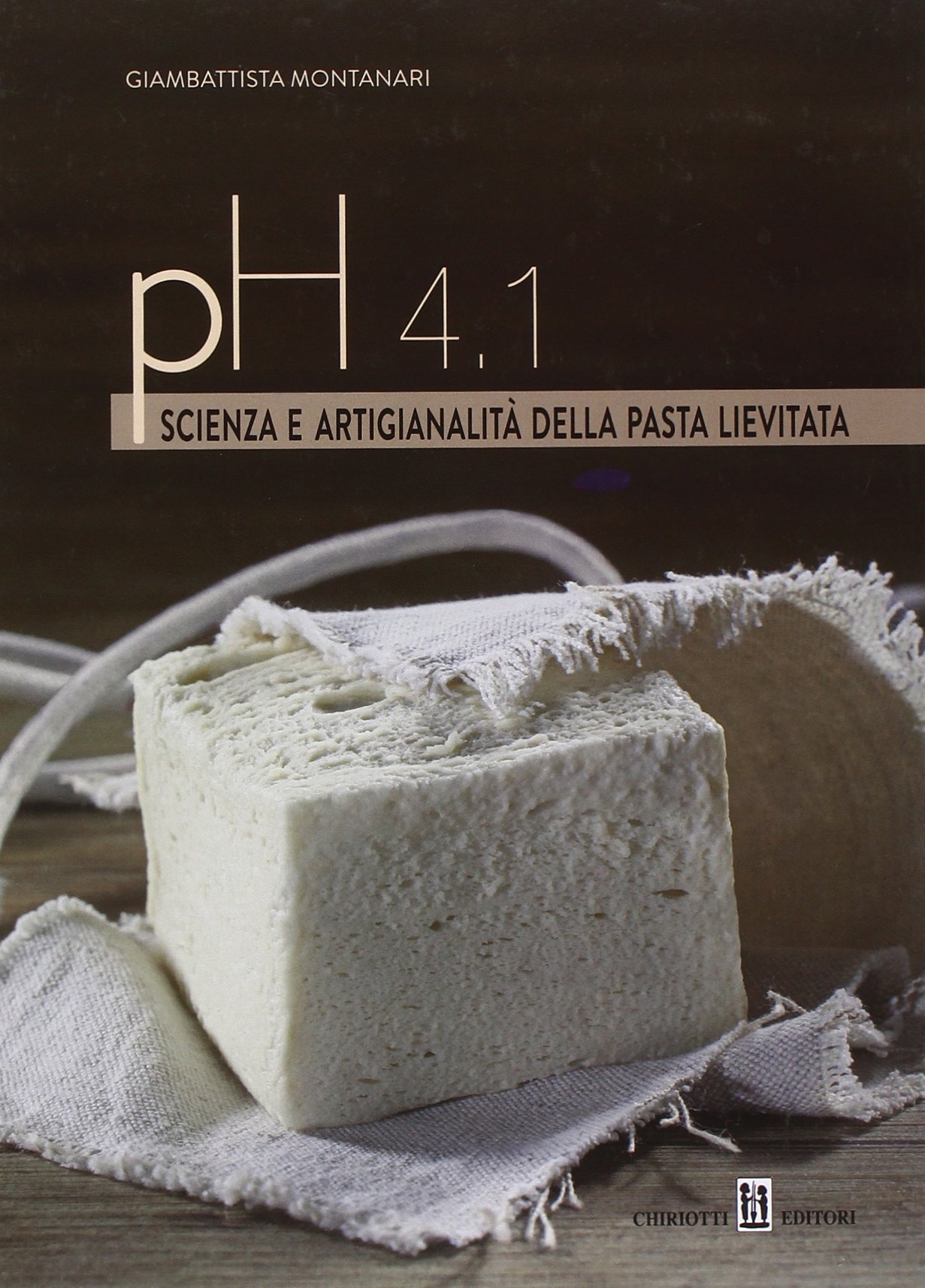
Ultimo aggiornamento 2026-04-29 / Affiliate links / Immagini da Amazon Product Advertising API
Feeding a Tied Sourdough Starter
If you keep your starter wrapped and tied, it will generally have higher overall acidity, particularly a greater proportion of lactic acidity and less acetic acidity.
In this case as well, the feeding can begin with a water bath at 20–22 °C (68–72 °F), with 2 g of sugar or fructose per liter of water, for approximately 15–20 minutes.
To calculate the water for the following feeding more accurately, I recommend weighing the starter before and after the water bath. This allows you to determine how much water the starter absorbed and adjust the amount of water added during the feeding accordingly.
Once the starter has been squeezed and weighed, mix it using the following ratio:
- 1 kg sourdough starter
- 2 kg strong W360 flour (approximately 14–15% protein)
- 920 g total water (46% of the flour weight), including the water absorbed during the bath. Use water at the appropriate temperature described above.
As described above, flatten the starter, give it 3 folds, and shape it into a log. Wrap it first in a food-safe plastic sheet — do not use ordinary plastic wrap because it is too thin — and then tightly roll it inside a strong cotton or linen cloth.
Finally, tie it with cord, as you would a sausage, leaving the cord slightly loose so that the starter has room to expand and tighten against the wrapping.
Once prepared, the tied starter can be kept at room temperature between 18 and 22 °C (64–72 °F) for approximately 16 hours.
Preparatory Sourdough Feedings: Ratios and Timing
Before using sourdough starter in a recipe, it should generally undergo 2 or 3 closely spaced feedings. Their purpose is to strengthen the starter by increasing the population of yeasts and lactic acid bacteria, balance its acidity, and promote the production of compounds that can contribute to the shelf life of the finished baked product when it is properly packaged.
For Italian large enriched products such as panettone, pandoro, and veneziana, it is customary to perform 3 preparatory feedings. For leaner doughs such as croissants, bread, or pizza, 2 feedings are generally sufficient.
Even for large enriched products, when time is limited it is possible to stop after the second feeding, although this may slightly reduce the keeping quality of the finished product.
The first thing to consider when starting a recipe with sourdough starter is how much starter you need to begin with so that you end up with both the correct amount for the recipe and a reasonable amount to keep for future feedings.
For this reason, I developed a simple calculator that helps you determine exactly how much starter to feed for your recipe without running out.
Use the Biancolievito Sourdough Feeding Calculator
The 3 Preparatory Feedings for Sourdough Starter Stored in Water
After several years of using the 1:0.9 feeding ratio with good results — 1 kg starter to 900 g flour — I decided to experiment with different feeding techniques. Reading several technical texts inspired me to question and further develop what I had learned over the years.
This method for preparing a starter stored in water is based on the following principles:
- A starter stored in water has lower lactic acidity because part of that acidity is dispersed into the storage water. During the 2 or 3 preparatory feedings, we therefore want to help rebalance this acidity.
- The ratio between starter and flour influences the conditions available for bacterial growth. Using too much starter and too little fresh flour can limit bacterial proliferation and lead to a less balanced starter. In Giambattista Montanari’s Omnia Fermenta, you can read that favorable biological conditions are obtained when the sourdough starter represents approximately 10–30% of the total refreshed dough. For example, with a 1:2 ratio, 100 g starter + 200 g flour + 80 g water produces 380 g of dough, of which the starter represents approximately 26% of the total.
Here is what I changed in this method:
- Between one feeding and the next, I ferment the starter outside the water, rather than keeping it in water at 24–26 °C (75–79 °F).
- I use a starter-to-flour ratio of 1:1.5 instead of 1:0.9.
- I allow the starter to rise until it reaches approximately 2.5 times its initial volume.
Let’s see how it works.
FIRST FEEDING – Starter Stored in Water
Begin with a 15–20 minute water bath at 38 °C (100 °F), adding 2 g of sugar or fructose per liter of water. After the bath, squeeze out the starter and feed it as follows:
- 1 kg starter, squeezed after the previous storage period
- 1.5 kg flour (W380, approximately 14–15% protein)
- 690 g warm water at the appropriate temperature (see above)
Mix until you obtain a firm, compact dough. Flatten it to approximately 1 cm thickness and give it 3 folds before shaping it into a tight ball.
Shape the starter tightly, score the surface to allow it to expand, and place it in a large container. Cover it with a cloth and ferment at 30 °C (86 °F) for approximately 3 hours and 30 minutes, until it reaches approximately 2.5 times its initial volume.
For greater accuracy, I recommend making a small test sample with a portion of the dough and marking its initial level so you can monitor the rise precisely.
The fermentation period needs to be long enough for the microbial population to develop. It is important to perform the second feeding when the starter has reached the peak of its development. In general, a well-performing starter will take approximately 3 hours and 30 minutes at 30 °C (86 °F).
SECOND FEEDING – Starter Stored in Water
- 1 kg starter from the previous feeding
- 1.5 kg flour (W380, approximately 14–15% protein)
- 690 g warm water at the appropriate temperature (see above)
Once again, mix the dough, give it 3 folds, shape it into a tight ball, score the surface, and allow it to rise to approximately 2.5 times its initial volume at 30 °C (86 °F). The fermentation time should again be approximately 3 hours and 30 minutes.
THIRD FEEDING – Starter Stored in Water
- 1 kg starter from the previous feeding
- 1.5 kg flour (W380, approximately 14–15% protein)
- 690 g warm water at the appropriate temperature (see above)
Mix the starter and give it another 3 folds. At this point, set aside the portion of starter you intend to keep and weigh the amount needed for your recipe.
- Starter for the recipe: shape it into a tight ball, score the surface, and allow it to rise once again to approximately 2.5 times its initial volume at 30 °C (86 °F) in about 3 hours and 30 minutes. At this point, the starter is ready to use.
- Starter to be stored: immerse it in cool water at approximately 19 °C (66 °F) and leave it at room temperature, around 19–20 °C (66–68 °F), for 24 hours until the next feeding.
The 3 Preparatory Feedings for a Tied Sourdough Starter
For a tied starter, begin with a water bath at 20–22 °C (68–72 °F), adding 2 g of sugar or fructose per liter of water, for approximately 15–20 minutes.
As explained above, weigh the starter before and after the bath so that you know how much water it has absorbed.
FIRST FEEDING – Tied Sourdough Starter
- 1 kg sourdough starter
- 2 kg flour (W380, approximately 14–15% protein)
- 920 g total warm water at the appropriate temperature, including the water absorbed during the bath
Mix the starter, flatten it to approximately 1 cm thickness, and give it 3 folds. Shape it into a tight ball, score the surface with a cross, place it in a container, and ferment for approximately 3 hours and 30 minutes at 30 °C (86 °F), until it reaches approximately 2.5 times its initial volume.
SECOND FEEDING – Tied Sourdough Starter
Follow the same procedure described above, but use the following proportions:
- 1 kg sourdough starter
- 1.5 kg flour (W380, approximately 14–15% protein)
- 690 g warm water at the appropriate temperature (see above)
THIRD FEEDING – Tied Sourdough Starter
Follow the same procedure as for the second feeding, using the following ratio:
- 1 kg sourdough starter
- 1.5 kg flour (W380, approximately 14–15% protein)
- 690 g warm water at the appropriate temperature (see above)
Once mixed, weigh out the starter needed for your recipe and allow it to rise until it reaches approximately 2.5 times its initial volume in 3 hours and 30 minutes at 30 °C (86 °F).
Wrap the remaining starter in a food-safe plastic sheet and then in a cotton cloth, tie it with cord, and store it at room temperature at approximately 19–20 °C (66–68 °F) for 16 hours.













66 thoughts on “Come rinfrescare il lievito madre: tabella dosi e bagnetto”
Salve.
Forse ho perso un passaggio ma vorrei sapere come faccio a pesare il lievito dopo averlo strizzato dall’acqua per regolarmi con il quantitativo di farina. ?
Grazie
Ciao Daniela,
devi semplicemente tirare fuori dall’acqua del bagnetto i pezzi di lievito, strizzarli bene e pesarli… sulla base di quel peso, aggiungerai farina ed acqua per il rinfresco!
A presto
SLAVE,
HO LASCIATO IL LIEVITO MADRE PER 4 GIORNI PRIMA DI FARE IL PRIMO RINFRESCO. POSSO FARE IL PRIMO RINFRESCO O È ANDATO MALE?
GRAZIE MILLE
MAURIZIO
Ciao Maurizio,
lo hai lasciato in frigo o a temperatura ambiente?
Dopo 4 giorni potrebbe essere acido, ma lo puoi ancora recuperare con il bagnetto e poi un rinfresco con un rapporto lievito:farina di 1:1.2 (1kg di lievito e 1.2kg di farina)!
Una volta pronto, lo conservi in acqua per 24h a temperatura ambiente!
A presto
Io sto facendo il lievito madre e ne rinfresco sempre 300 gr di madre.
Sto sbagliando?
Ciao Andrea,
sarebbe meglio rinfrescarne di più (circa 700gr), così da non perderlo troppo!
Per contro, non hai necessità di rinfrescarlo ogni giorno
A presto
Ciao mi hanno regalato il lievito madre e faccio il pane , non viene soffice, forse sbaglio i rinfreschi, esco il lievito madre dal frigo e dopo qualche ora lo rinfresco ,dopo 4ore impasto il pane , mi puoi dire se è giusto il rinfresco
Ciao Mariella,
in effetti questo procedimento è sbagliato, in quanto non puoi usare il lievito madre direttamente da frigo.
Una volta tolto dal frigo, devi lasciare il LM a temperatura ambiente per 24ore e dovrai rinfrescarlo tutti i giorni (ogni 24ore) per almeno 4/5giorni prima di usarlo nella ricetta.
In questa pagina, leggerai qual’è il modo giusto di usare il lievito conservato in frigo:
Usare il Lievito Madre conservato in frigo
Per il tuo caso, sarebbe molto più conveniente usare il Li.Co.Li, ovvero il Lievito su Coltura Liquida che invece puoi usare dal frigo, dopo solo 1 rinfresco!
Molto presto pubblicherò una guida su come usare il Licoli.. ti avviserò per email!
A presto
Ho incominciato ma mi sembra complicato. Ma perché poi tu lo conservi in acqua? Se uno lo vuole continuare a tenere nel barattolo di vetro in frigo può andare bene? Sempre di scoperto anche in frigo?
Ciao Simona!
in realtà bisogna distinguere il Sourdough Starter (quello per intenderci solido) dal LiCoLi, che invece è un lievito liquido che si conserva giustamente nel barattolo.
Per il Licoli puoi continuare a conservarlo in frigo, in questo caso coperto e rinfrescarlo 1volta a settimana!
Al contrario il Lievito Madre può essere conservato in acqua (con diversi vantaggio), oppure legato.
A presto!
se io ho il lievito che non e’ stato ancora in acqua posso rinfrescarlo e poi immergerlo in acqua.grazie
Ciao Giuliano, non ci sono problemi… rinfrescalo prima come ti spigo qui sopra e poi immergilo in acqua. Tieni conto che ci vorrà qualche giorno prima che il lievito si adatti al nuovo “habitat” per cui ti consiglio di rinfrescarne almeno 700gr, perché tenderà a sfaldarsi un pò i primi giorni!
A presto!
salve a tutti e scusatemi volevo un informazione mi hanno dato circa 50g di lievito madre in 3 giorni mi è diventato 600g facendo un rinfresco al giorno quando posso utilizzarlo per fare il pane e se il procedimento per il rinfresco che faccio è buono