cookies a base di pasta frolla con scaglie di cioccolato

Pasta Frolla: Italian Shortcrust Pastry Recipe & Variations

table of contents

CLASSIC SHORTCRUST PASTRY RECIPE

Shortcrust pastry is one of the fundamental preparations of Italian pastry making. Tarts, cookies, and tartlets all start with this simple yet delicate dough, which requires precision and proper technique to achieve the best results. In this guide, you’ll learn how to make classic Italian shortcrust pastry and its main variations, while avoiding the most common mistakes and following professional pastry-making techniques.

How to Make Shortcrust Pastry Step by Step

Shortcrust pastry requires only a few ingredients, but precision makes all the difference. Here are the key points:

  • Butter: Depending on the mixing method, use cubed butter at 14–16 °C (57–61 °F), when it is soft and pliable, or cold butter straight from the refrigerator at about 4 °C (39 °F). Never use melted butter.
  • Flour: Choose a low-protein flour (Italian 00 flour with about 8–9% protein) to achieve a tender, crumbly texture.
  • Sugar: Use powdered sugar for a finer, smoother shortcrust pastry, or granulated sugar for a crisper texture.
  • Mixing: You can prepare the dough by hand or with a stand mixer, using either the sablage or creaming method. Avoid overmixing, as excessive gluten development will make the pastry tough.
  • Resting: Let the dough rest in the refrigerator for at least 2 hours, preferably 12.
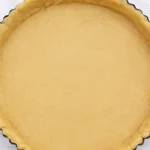
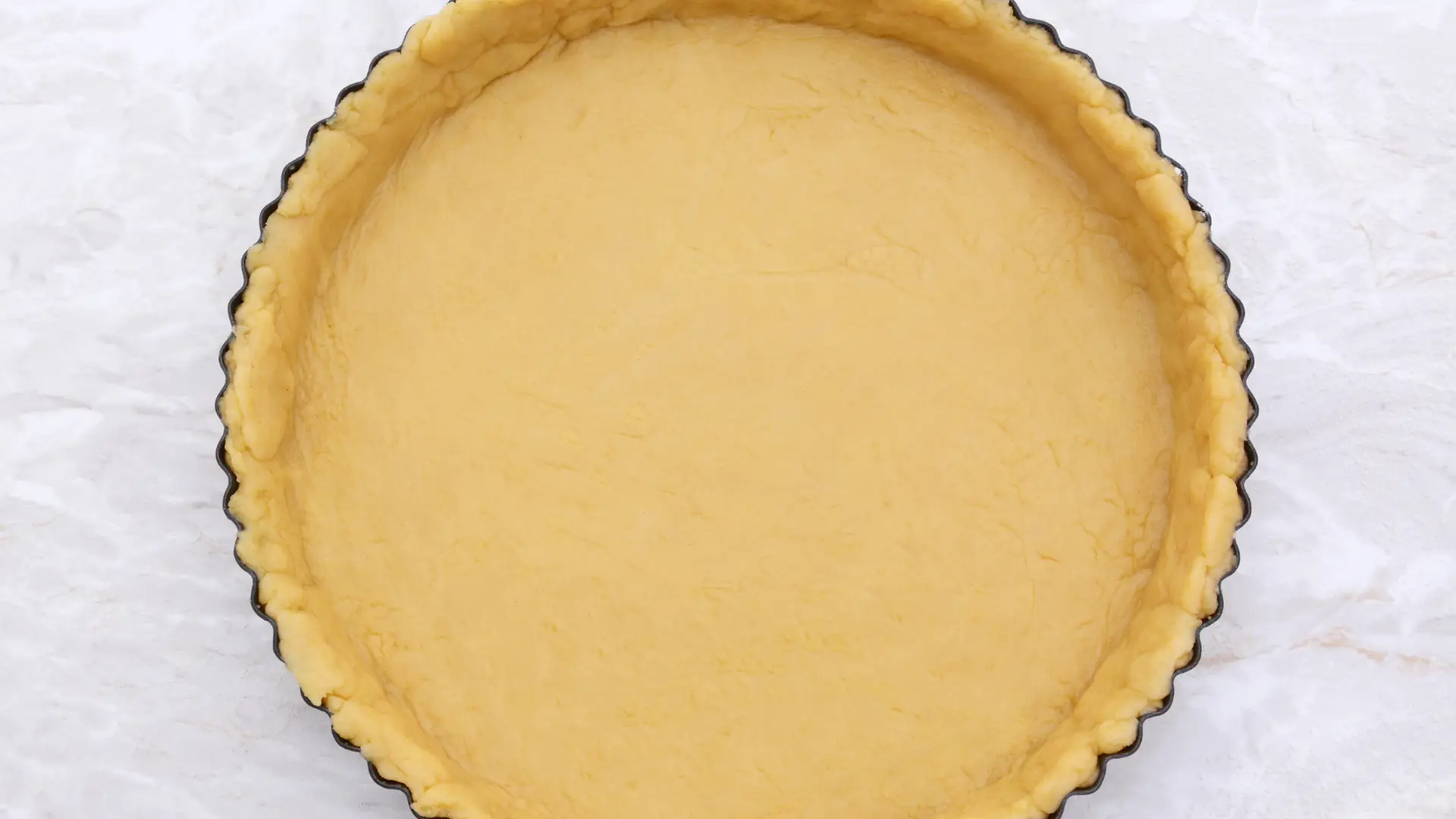
Pasta frolla per crostate e biscotti pronta per essere cotta
This is my favorite Shortcrust pastry for making excellent tarts with fruit jams or custard.
This traditional Italian recipe is enriched with a small quantity of honey that will bring a goldish color to the baked tart!
Prep Time: 10 minutes
Chilling: 2 ore
Total Time: 2 ore 10 minutes
1100 gr of Shortcrust Pastry

Equipment

  • Stand Mixer

Ingredients

Instructions

  • Work at medium speed softened butter with powdered sugar, honey, and flavorings in the mixer
  • Separately, dissolve the salt into the eggs so that it is dispersed. Once the butter is well mixed with the sugars, add the eggs while continuing to mix.
  • Add the flour to the mixture and knead just for the time needed to form the dough. It is essential not to overdo with the working of the shortcrust pastry and avoid the formation of gluten, which would make the tart not very crumbly and "rubbery" once baked.
  • Let set the shortcrust pastry in the fridge for at least 2 hours covered with plastic wrap.
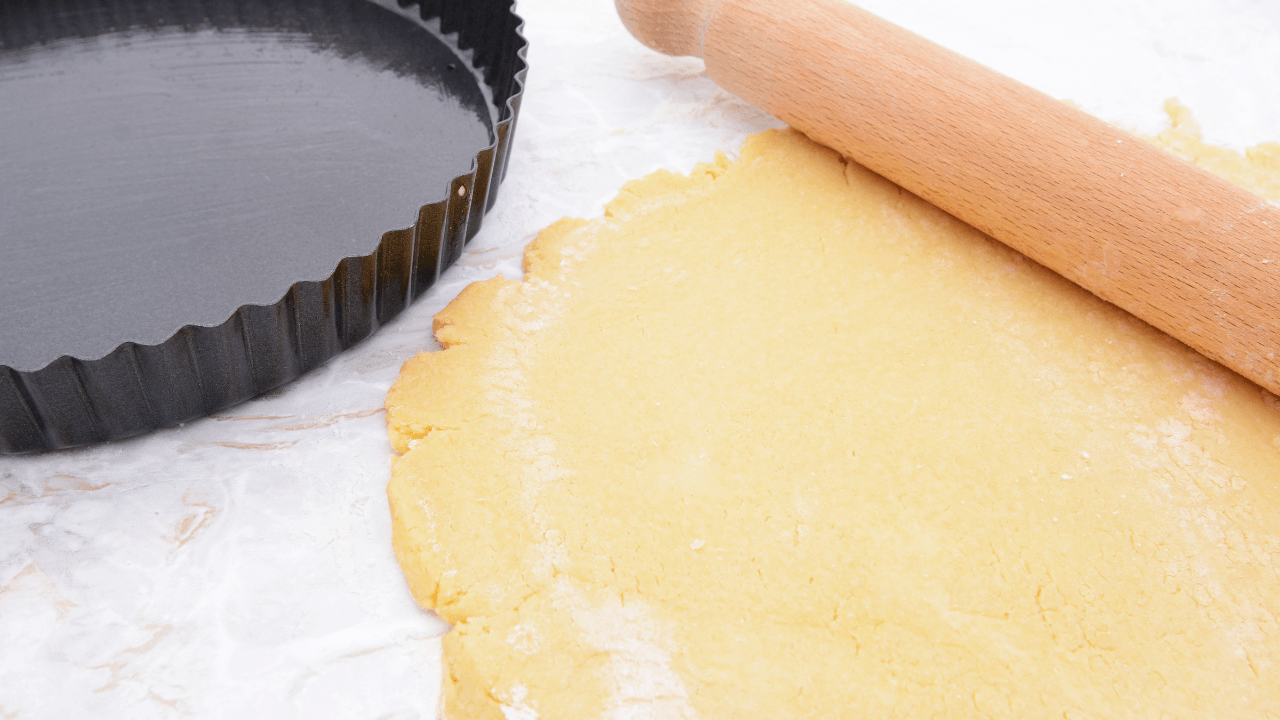
  • When out of the fridge, shortly re-knead the shortcrust pastry and roll it out (to about ½ cm to make tart bottoms) using a tiny amount of flour.
  • Bake in a preheated oven at 160°C (320°F) for at least 20 min with the oven door slightly open.

Video

Notes

You can keep the shortcrust pastry well covered in the fridge for 4-5 days or freeze it at -18°C (0°F) for 2 months.
If you use granulated sugar instead of icing sugar, you will obtain a shortcrust pastry with a larger alveolation. In this case, simply replace the quantity of one sugar with the other.
Gluten-Free Shortcrust Pastry (Pasta Frolla)
Scopri la Ricetta
Croccante pasta frolla senza glutine per crostate

Shortcrust Pastry Variations with Suggested Ratios

Classic Shortcrust Pastry (Milano Style)

The most versatile version, perfect for tarts and cookies.
Ingredients: 500 g low-protein 00 flour, 250 g butter, 250 g powdered sugar, 100 g whole eggs.
Tender and well balanced, this is one of the classic reference formulas in traditional Italian pastry making.

Tender Shortcrust Pastry

More butter, less sugar, and fewer eggs create a softer, more delicate, crumbly texture.
Ingredients: 500 g flour, 350 g butter, 175 g powdered sugar, 85 g whole eggs.
Ideal for cream- or fruit-filled tarts and for preparations where a particularly tender, crumbly texture is desired, although the dough will also be more delicate to handle.

Crisp Shortcrust Pastry

Less butter, more granulated sugar, and more eggs give the dough a firmer structure and a crisper texture.
Ingredients: 500 g flour, 200 g butter, 290 g granulated sugar, 115 g whole eggs.
Ideal for crisp cookies and tart shells that need greater structural strength.

Common Mistakes to Avoid When Making Shortcrust Pastry

1. Using Butter That Is Too Soft or Melted

The butter should remain pliable and must not melt. If it is too warm, the dough becomes greasy and difficult to handle.

2. Overworking the Dough

Overworking shortcrust pastry develops too much gluten and makes it tough. Mix only until the dough comes together and becomes homogeneous.

3. Skipping the Refrigeration Rest

Resting is essential to firm up the butter and relax the gluten. Without this step, the dough is more likely to lose its shape during baking.

4. Baking at Too High a Temperature

The baking temperature depends on the thickness, shape, and intended use of the shortcrust pastry. In general, bake it at 160–170 °C (320–338 °F) in a conventional oven. Lower temperatures promote more even baking, while higher temperatures speed up browning and drying. Avoid excessive heat, which can brown the surface too quickly before the pastry is evenly baked through.

5. Not Weighing the Eggs

Eggs vary in weight, so it is best to weigh them and follow the correct ratio to avoid throwing the dough out of balance.

Technical Tips for Perfect Shortcrust Pastry

  • Use pliable butter at 14–16 °C (57–61 °F) for classic and whipped shortcrust pastry, and cold butter at about 4 °C (39 °F) for the sablage method.
  • Let the dough rest in the refrigerator for at least 12 hours for the best tart results.
  • Add honey or invert sugar to help retain moisture and improve browning during baking.

How to Store Shortcrust Pastry

  • In the refrigerator (+4 °C / 39 °F): keep the shortcrust pastry tightly wrapped in plastic wrap for 4–5 days.
  • In the freezer (−18 °C / 0 °F): it can be stored for up to 2 months. Thaw it slowly in the refrigerator before working with it again.
Whipped Shortcrust Pastry
Scopri la Ricetta
Pasta frolla: ricetta classica e varianti | biancolievito

The Essential Ingredients of Shortcrust Pastry

Shortcrust pastry is made from four basic ingredients: flour, sugar, fat, and liquids. Additional ingredients such as cocoa, nuts, or flavorings can also be added to enhance its flavor and texture.

Flour

For a tender, crumbly shortcrust pastry that is not chewy, use a low-protein pastry flour, with a protein content between 8% and 9%. Whether it is Italian type 0, 00, or type 1 is less important: always check the label and choose a flour with a low protein content to limit gluten development.

Sugars

In addition to providing sweetness and color during baking, sugars also act as preservatives because they bind free water. Granulated sugar produces a crisper shortcrust pastry, while powdered sugar gives it a softer texture.

Fats

Butter is the ingredient that gives shortcrust pastry its tender, crumbly texture and aroma. It helps carry flavors, improves shelf life, and limits gluten development. For the best results, always allow the dough to rest in the refrigerator at about +4 °C (39 °F).

Liquids and Eggs

Eggs provide water and proteins that help give structure to the dough. As a general guideline, they are calculated at around 10% of the total weight of the recipe. Egg yolks, which are rich in fat, also increase tenderness and add color.

Shortcrust Pastry Mixing Methods

The mixing method has a major impact on the final result. The same formula can produce very different textures depending on how it is prepared. The three main methods are:

1. Classic Method

Work pliable butter at 14–16 °C (57–61 °F) with the sugar and flavorings, then add the eggs beaten with the salt, followed by the flour. After mixing, let the dough rest in the refrigerator for 10–12 hours.

2. Sablage Method

Mix cold butter at about 4 °C (39 °F) with the flour until the mixture develops a sandy texture. This helps reduce gluten development and produces a more tender, crumbly shortcrust pastry. After adding the sugar and eggs, let the dough rest in the refrigerator for 10–12 hours.

3. Creaming Method

This method is ideal for piped cookies. Cream pliable butter at 14–16 °C (57–61 °F) with the sugar, then add the eggs, flavorings, and flour. This type of shortcrust pastry should be used immediately. Do not exceed 30% butter of the total recipe weight, otherwise the cookies may lose their shape during baking.

How to Customize Your Shortcrust Pastry Formula

For those who want to create their own formulas, here are a few guidelines for balancing the ingredients in shortcrust pastry to achieve very different results.

The BASIC BALANCING FORMULA for a standard shortcrust pastry suitable for a wide range of preparations uses the following proportions:

  • Flour: 1 kg
  • Sugar: 500 g
  • Butter: 500 g

>> Total weight of ingredients: 2 kg

Now let’s calculate the amount of eggs. Eggs are generally added at 10% of the total weight of the ingredients. In this example, 10% of 2 kg = 200 g.

Do not forget the salt, which is calculated at 0.5% of the flour weight. With 1 kg of flour, this gives 0.5% × 1,000 = 5 g of salt.

So far, this is fairly straightforward. But what happens if we start increasing the amount of butter to obtain a more tender, crumbly shortcrust pastry, for example one to use as the base for a mousse?

In this case, not only the fat content changes, but also the amount of liquid in the formula, since approximately 18% of butter consists of a liquid component. As a general guideline, for every 100 g of butter added or removed, compensate with approximately 30 g of eggs or 35 g of egg yolks. Keep in mind that when you increase the butter, you need to decrease the eggs, and vice versa.

For example:

  • Flour: 1 kg
  • Sugar: 500 g
  • Butter: 600 g (+100 g compared with the standard formula)
  • Eggs: 200 − 30 = 170 g
  • Salt: 5 g

Additional Ingredients

  • Cocoa powder: replace 100 g of flour with 20 g of unsweetened cocoa powder and add 10 g of sugar.
  • Nut flour: replace 100 g of flour with 200 g of nut flour; add an amount of egg equal to 10% of the weight of the nuts.
  • Nut pastes: for every 50 g of butter, add 10 g of hazelnut or pistachio paste and an amount of egg white equal to 20% of the weight of the paste.
  • Chocolate or cocoa mass: add 300–400 g per kg of flour, melted to 30 °C (86 °F) and incorporated into the butter.

I replay your questions about shortcrust pastry

Can I replace granulated sugar with icing sugar?

Yes, you can replace the granulated sugar with an equal weight of icing sugar. The shortcrust pastry prepared with icing sugar will have smaller alveoli than that prepared with granulated sugar.

Can I use Margarine instead of butter?

Yes, you can replace the butter with Margarine in equal weight.

Can I replace butter with oil?

Yes, but in this case, be careful to use oils that are not too strong in flavor (such as rice oil).

Olive oil can be a good substitute for butter, but I recommend using about 100gr for every 400gr of flour.

Can I freeze the shortcrust pastry?

Yes, you can freeze the shortcrust pastry for about 60 days.

When you want to thaw it, place it in the fridge for 24h, before using it, and avoid thawing it at room temperature.

How long does the shortcrust pastry keep in the fridge?

If well wrapped with plastic wrap, you can store the shortcrust pastry in the refrigerator for up to 5/7 days.

This will allow you to prepare the shortcrust pastry quite in advance!

Can I use baking powder in shortcrust pastry?

Baking powder is generally used if you want to obtain a shortcrust pastry with marked alveolation. Still, in most cases, it is not used.

When making dry cookies, you can substitute baking powder with baking ammonia and get crispy cookies. Don’t worry; the smell of ammonia you perceive during the baking will not stay in the baked product.

Can I substitute eggs for the yolks?

In general, yes, but in this case, you need to review the liquids in the recipe (those lost from replacing the egg whites).

Can I make shortbread with wholewheat flour?

Yes, but be careful to choose weak flours, low in proteins. In case you want to use type 1 or wholewheat flour, I suggest you prepare the shortcrust pastry with the sablé technique to limit gluten formation.

Can I knead the shortcrust pastry by hand?

Sure, the process and the ingredients’ order do not change vs. the process with the stand mixer. To avoid overheating the dough with your hands’ heat, I recommend using a fork to mix the ingredients and then finish the dough with your hands.

Why is my shortbread very hard and tends to crumble once removed from the refrigerator?

Once removed from the fridge, the shortcrust pastry tends to be less plastic.

For this, you will just need to knead it for a few minutes, until it gets the right consistency.

However, suppose the shortcrust pastry tends to crumble once it is out of the refrigerator. In that case, it is most likely due to an incorrect balance in the recipe.

You can remedy this by adding a tiny amount of water, recompacting everything, and then working the dough as you prefer.

Why is honey added in Short Crust Pastry?

The addition of honey is widespread in shortcrust pastry used for tarts. The honey will give the shortcrust pastry a beautiful color during baking, lower the baking temperature by 20°C (68°F)

I don't have time to let the Shortcrust Pastry chill in the fridge. What can I do?

I suggest you place the shortcrust pastry between 2 sheets of baking paper, lower it to about 1cm thick and then place it in the freezer for 15/30minutes.

Why does shortcrust pastry is not crispy after baking?

Suppose the consistency of the shortcrust pastry is not crispy and crumbly after baking. In that case, this is due to the wrong proportion of sugar and fat. Most likely, you have used too much sugar and not enough butter (or fat).

Why does shortbread tend to crumble when baked?

The explanation is in the excessive quantity of butter (or fat) in the recipe. Shortcrust pastry very rich in butter (above 600gr per 1kg of flour) and, therefore, very crumbly is preferable for making bottoms for mousse and modern cakes. Still, they are not suitable for making tarts.

Can I use rice flour?

Yes, if you want to obtain a gluten-free pastry. In this case, decrease the amount of liquid (eggs) because rice flour absorbs less water than wheat flour.

Cocoa Shortcrust Pastry
Scopri la Ricetta
Pasta frolla: ricetta classica e varianti | biancolievito
Custard Pie
Pasta frolla: ricetta classica e varianti | biancolievito

Share

9 thoughts on “Pasta Frolla: Ricetta Classica e Varianti”

  1. è possibile omettere lo zucchero o invece di utilizzare lo zucchero classico, utilizzare diversi tipi di dolcificante?

  2. Ciao,
    come posso calcolare quanti grammi di frolla servono in base alla teglia che uso?
    Ad esempio, per foderare uno stampo da 24 cm quanti grammi di frolla servono?

    1. Ciao Matteo,
      per una teglia da 24cm impasta pure 250gr di farina per ottenere 600gr di Frolla!
      Se usi una da 32cm, fai invece 500gr (1.2kg di Frolla)

      A presto!

5 from 2 votes (1 rating without comment)

Lascia un commento

Your email address will not be published. Madatory fields are indicated as *

Voto della Ricetta