
Table of Contents
What Is a Sourdough Starter?
A sourdough starter, also known as natural starter, natural leaven, or levain, is a simple fermented mixture of flour and water in which a stable community of microorganisms develops naturally. If you are starting from scratch, in my dedicated guide I explain how to make a sourdough starter at home, from the first fermentation through the feedings needed to make it mature and stable. This microbial community is then kept active over time through regular feedings, which consist of adding fresh flour and water at regular intervals.
When we talk about sourdough starter, therefore, we are not referring to a single type of yeast, but to a true microbial ecosystem in which different populations of yeasts and lactic acid bacteria coexist. The interactions between these microorganisms determine the starter’s fermentative strength, acidity, and aromatic profile. Fermentation relies on the sugars available in the flour: yeasts mainly produce carbon dioxide, which is essential for dough expansion, while lactic acid bacteria primarily produce lactic acid and acetic acid, along with many other metabolic compounds that contribute to the acidity of the dough.
For this reason, sourdough starter is not simply an alternative way to make dough rise: it is a dynamic biological system whose behavior changes depending on the flour, hydration, temperature, fermentation time, and the way the starter is maintained.
Sourdough Starter vs. Commercial Yeast: What’s the Difference?
The fundamental difference between sourdough starter and commercial baker’s yeast lies in their microbiological composition.
Commercial baker’s yeast, whether fresh or dry, consists primarily of selected cultures of Saccharomyces cerevisiae. Its main role is to ferment available sugars, producing carbon dioxide and ethanol. It is therefore a highly predictable, fast-acting leavening agent that is easy to dose.
Sourdough starter, as we have seen, contains a much more complex population of microorganisms. Alongside yeasts, it contains numerous lactic acid bacteria, and it is the interaction between these different populations that makes sourdough fermentation more complex.
This difference has a profound effect on how the dough behaves. With sourdough, the production of gas needed for leavening is accompanied by a true acidification of the dough and the formation of numerous aromatic compounds. Fermentation times also tend to be longer, and the final result depends much more on the balance and overall condition of the starter.
Sourdough starter therefore requires more careful management than commercial yeast: it must be maintained, fed, and monitored over time so that its different microbial populations remain balanced and retain good fermentative strength.
How Sourdough Starter Works: Yeasts, Lactic Acid Bacteria, and Fermentation
To truly understand how a sourdough starter works, we need to take a closer look at the two main microbial populations that make up its ecosystem: yeasts and lactic acid bacteria. These microorganisms do not work independently; they interact with one another as they use and transform the nutrients found in flour.
The Role of Yeasts
Yeasts, including species such as Saccharomyces exiguus, Saccharomyces cerevisiae, and other yeasts naturally selected within the starter, primarily use the simple sugars available in the dough, such as glucose and fructose.
Through fermentation, they mainly produce carbon dioxide and ethanol. Carbon dioxide becomes trapped within the dough structure and causes it to expand during fermentation, while ethanol and numerous other compounds produced through yeast metabolism contribute to the aromatic profile of naturally leavened products.
During yeast metabolism, other substances are also produced or accumulated that play an important role in helping the cells adapt to the conditions within the dough. These include trehalose, a sugar that helps protect yeast cells under stressful conditions, and glycerol, which is particularly important in the response to osmotic stress caused by high concentrations of sugar.
This becomes especially important in enriched doughs, such as panettone, pandoro, and other traditional Italian enriched breads, where high levels of sugar and fat create a more challenging environment for yeast fermentation.
The Role of Lactic Acid Bacteria
Alongside the yeasts, sourdough starter contains lactic acid bacteria, another essential component of its microbial ecosystem. These microorganisms also use the sugars available in the dough, but their fermentation primarily results in the production of organic acids.
Depending on the species present and their metabolism, lactic acid bacteria can be broadly divided into homofermentative and heterofermentative bacteria.
- Homofermentative bacteria primarily produce lactic acid.
- Heterofermentative bacteria can produce acetic acid, carbon dioxide, ethanol, and other metabolites in addition to lactic acid.
The presence and relative proportions of these compounds play a major role in determining the acidity, aroma, and sensory characteristics of the sourdough starter and, consequently, of the dough in which it is used.
The Balance Between Yeasts and Lactic Acid Bacteria
The quality of a sourdough starter does not depend simply on the number of microorganisms it contains, but above all on the balance between its different microbial populations.
A well-managed sourdough starter must have good gas-producing ability, which is essential for leavening, while also maintaining balanced acidity. The relationship between yeast activity, lactic fermentation, and acetic fermentation therefore influences the starter’s fermentative strength, aromatic profile, and behavior in dough.
This balance is dynamic and can change continuously. Temperature, flour type and strength, hydration, fermentation time, feeding frequency, and storage method all contribute over time to selecting different microbial populations and influencing the metabolism of the microorganisms already present.
This is why two sourdough starters made from exactly the same ingredients can develop very different characteristics over time: day-to-day management helps select and stabilize the starter’s microbial ecosystem.
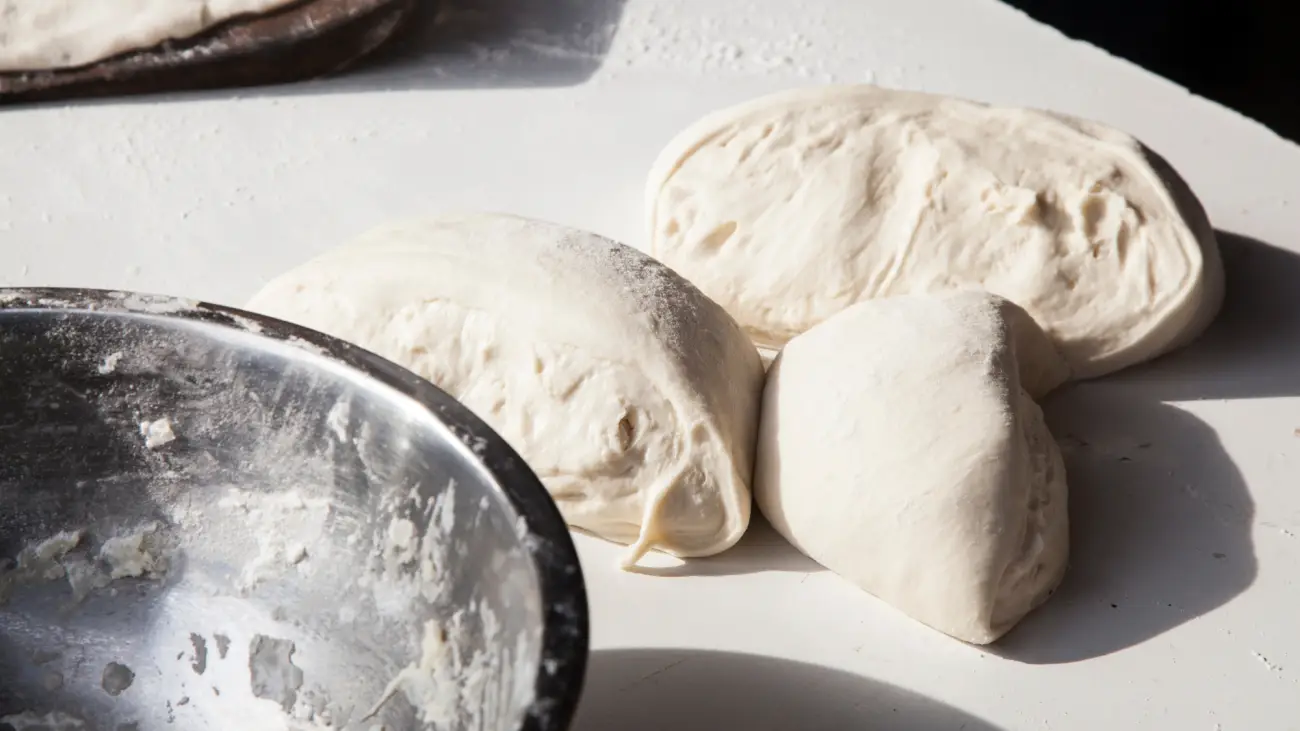
Sourdough Starter vs. Liquid Levain: What’s the Difference?
Sourdough starter can be maintained at very different consistencies. The two most common forms are sourdough starter and liquid levain.
The most obvious difference is hydration, meaning the amount of water used in relation to the flour. A sourdough starter generally contains about 45–50% water relative to the flour, giving it a firm, workable consistency. Liquid levain, on the other hand, is typically maintained with equal weights of flour and water, which means 100% hydration and results in a creamy or semi-liquid consistency.
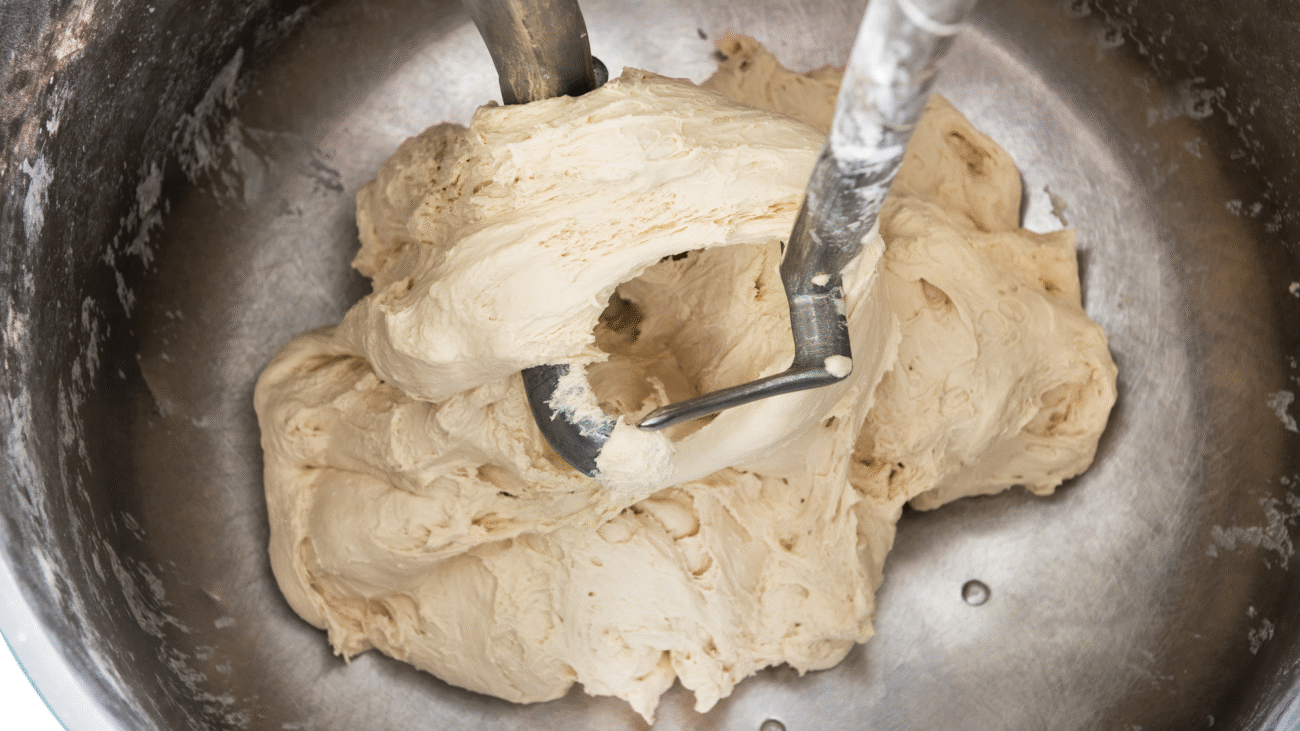
Sourdough Starter
Sourdough starter is the form traditionally used in Italian pastry making, especially for large enriched leavened products such as panettone, pandoro, and colomba.
The lower water content, together with temperature, fermentation time, and feeding method, gradually helps select a specific balance between yeasts and lactic acid bacteria, thereby also influencing the acidity of the starter itself. For this reason, managing a sourdough starter requires particular attention to its development, fermentative strength, and acidity.
Sourdough starter can also be maintained using different methods: it may be tied, stored in water, or kept free. Each method creates different conditions for the starter’s microflora and can significantly influence its characteristics.

Liquid Levain
Liquid levain is also a form of sourdough starter. It is not a different type of leavening culture, but rather a natural starter maintained with a higher proportion of water.
It is often fed using equal weights of levain, flour, and water, which keeps it at 100% hydration. Its liquid consistency generally makes levain easier to mix and manage at home.
It is widely used for bread, pizza, focaccia, and other naturally leavened doughs, while traditional Italian professional pastry making generally favors sourdough starter for large enriched products. However, professional formulas using liquid levain for enriched doughs do exist, provided that specific techniques and recipe balances are used.
How to Manage a Sourdough Starter: Free, Tied, or Stored in Water
Once you have an established sourdough starter, you can choose different methods to manage it over time. The three main methods are free starter, tied starter, and starter stored in water.
These are not simply three different ways of storing the same dough. The management method changes the conditions under which the starter ferments and can influence its development and acidity.
Free Sourdough Starter
With the free method, after feeding, the sourdough starter is left to ferment without being tied and without being immersed in water, generally inside a container large enough to allow it to expand.
This is probably the most straightforward method: the starter can expand freely and its growth is easy to observe. Since there is neither the pressure created by tying nor the dispersion of acids into water, everything produced during fermentation remains within the dough. This ease of management comes with a greater risk of the starter developing excessive lactic and acetic acidity. Its acidity will depend mainly on hydration — it is generally better to keep the starter fairly firm — fermentation temperature (around 16–19 °C / 61–66 °F), and fermentation time (approximately 16–24 hours depending on temperature).
The free method is therefore simple from a practical standpoint, but it still requires careful observation of the starter’s behavior, including its growth rate, consistency, aroma, and internal structure.
Tied Sourdough Starter
The tied sourdough starter method is a traditional system widely used in Italian baking and pastry making and is historically associated especially with the Milan area.
After feeding, the starter is shaped, first wrapped in a food-safe material, and then in a strong, loosely woven cotton or linen cloth. It is then tied with cord, leaving enough room for the starter to expand during fermentation and gradually exert pressure against the cloth.
The main characteristic of this method is precisely that fermentation takes place in a physically restricted space. The starter cannot expand freely as it does with the free method and becomes progressively more compressed as fermentation continues.
With this method, a tied starter tends to develop higher lactic acidity than a starter stored in water. In the finished baked product, however, this type of starter can produce more distinctive flavors and aromas and provide a longer shelf life.
The tied method is extremely effective, particularly for professional management of starters used for Italian large enriched products, but it requires experience. Since you cannot directly observe the expansion of the dough as easily as with a free starter or one stored in water, it becomes especially important to carefully control timing and temperature and to read other signals, including the pressure developed against the ties, consistency, aroma, internal structure, and acidity.
Sourdough Starter Stored in Water
The water-storage method is traditionally associated with Piedmont and is the method I personally recommend because of its relative ease of management and greater margin of safety.
After feeding, the starter is shaped and immersed in water until the next feeding. During fermentation, some of the acidic compounds produced by the starter can dissolve into the surrounding water. This interaction with the aqueous environment is one of the most interesting characteristics of the method: it makes it easier to manage excessive acidity and tends to produce a starter with lower lactic acidity than a tied starter.
Another practical advantage is that the starter’s behavior can be observed relatively easily during fermentation. Once immersed, the dough gradually evolves, and its behavior in the water — together with its consistency, aroma, and internal structure — provides useful information about its condition.
Which Sourdough Starter Management Method Should You Choose?
| Method | Pros | Cons | Difficulty |
|---|---|---|---|
| Free | Easy to manage. | Requires close attention to timing and temperature; risk of excessive acidification. | Medium |
| Tied | More pronounced aromas, better shelf life, and greater oven spring. | Requires close attention to timing and temperature; risk of excessive lactic acidity. | High |
| Stored in Water | Better control of lactic acidity. | Requires more space; slightly less pronounced aromas, shelf life, and oven spring; risk of weakening the starter. | Medium |
How to Recognize a Mature, Well-Balanced Sourdough Starter
Understanding when a sourdough starter is mature is one of the most important aspects of achieving good results, especially when working with complex doughs such as panettone, pandoro, and colomba.
A starter that rises well is not necessarily a well-balanced starter. In addition to its fermentative strength, we need to evaluate the structure of the dough, its aroma, taste, and level of acidity. So do not simply look at how much the starter has risen in its container. Open it, touch it, and examine its internal structure. With experience, you will learn to recognize these signs almost instinctively, but there are also some practical parameters that can help us understand whether the starter is fermenting properly.
How Much Should a Mature Sourdough Starter Rise?
After feeding, a sourdough starter should reach approximately 2.5 times its initial volume in 3 hours and 30 minutes at 30 °C (86 °F).
In practical terms, if the starting volume is 1, by the end of fermentation it should reach approximately 2.5. To monitor its development more accurately, I recommend preparing a small starter sample: take a small portion of the freshly fed starter, place it in a narrow graduated container, and mark the starting level. This allows you to measure its growth accurately rather than relying only on visual impressions.
Temperature is essential. The reference time of 3 hours and 30 minutes is meaningful only if the starter is fermenting at 30 °C (86 °F). At lower temperatures, microbial activity slows down and more time will be required to reach the same volume.
If, under the same feeding and temperature conditions, the starter is still far from 2.5 times its initial volume after 3 hours and 30 minutes, its fermentative strength is not yet where we want it to be. On the other hand, we should not assume that a starter is perfectly balanced simply because it rises very quickly: its rate of development must always be evaluated together with its acidity and physical characteristics.
Observe the Structure of the Starter
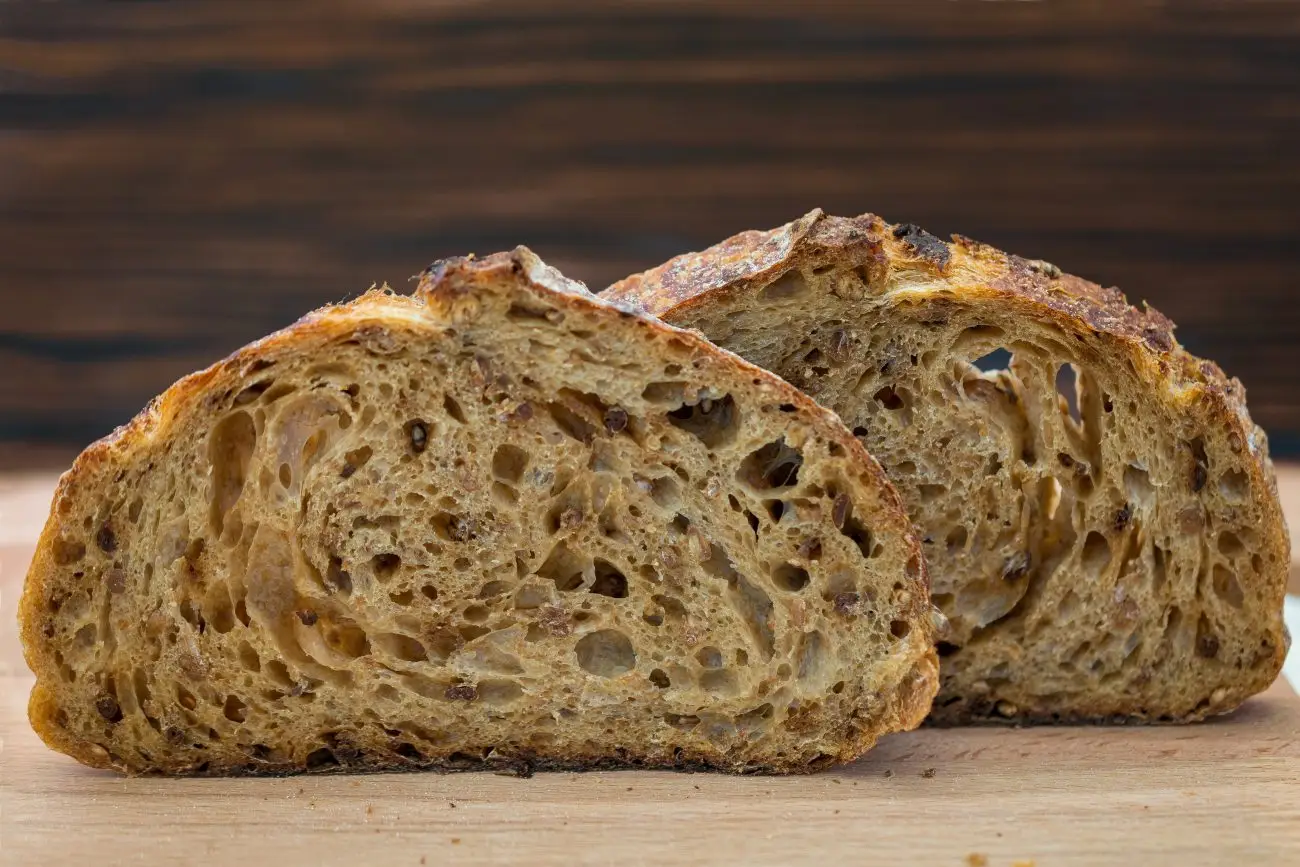
When you cut into a mature sourdough starter, you should find a well-developed, aerated internal structure, showing that the carbon dioxide produced during fermentation has been retained within the dough.
These are some of the clearest signs that can help you evaluate the condition of your starter:
- Starter in excellent condition: elastic dough that can still be handled and stretched slightly, with a uniform internal structure and slightly elongated air pockets.
- Starter with excessive acetic acidity: very firm and cohesive dough, with small, rounded air pockets and a thick, well-developed outer crust.
- Starter with excessive lactic acidity: sticky dough with poor internal aeration and a thin or poorly developed outer crust.
In the last two cases, the acidity is not properly balanced and you will need to take action to correct it.
Aroma and Taste: Learn to Read Your Starter
Sourdough starter should also be smelled and tasted. A healthy starter should have noticeable but balanced acidity, together with the typical aromas of natural fermentation, including slightly alcoholic and grape-must notes. An excessively sharp aroma or a flavor in which acidity completely dominates are signs that deserve attention.
By tasting and smelling your sourdough starter, you can build a much clearer picture of its condition:
- Excessive acetic acidity: a pronounced vinegar aroma, a sharp taste, a slight tingling sensation on the tip of the tongue, and a “metallic” aftertaste.
- Excessive lactic acidity: a slightly bitter taste perceived mainly toward the back of the tongue, usually accompanied by a softer and stickier consistency.
A pH Meter Is Useful, but It Does Not Tell the Whole Story
If you want to monitor your starter more precisely, a pH meter is certainly a very useful tool. It allows you to track the progression of acidification during fermentation and compare one feeding with the next in a more objective way.
However, it is important to understand exactly what this measurement tells us. pH provides information about the overall acidity of the sourdough starter, but it does not directly reveal the ratio between lactic acid and acetic acid.
For this reason, never judge your sourdough starter using a single parameter. The reference of 2.5 times its initial volume in 3 hours and 30 minutes at 30 °C (86 °F) gives us a practical indication of its fermentative strength, while structure, aroma, taste, and acidity help us understand whether that strength is supported by a well-balanced microbial ecosystem.
This combination is exactly what we are looking for: a starter that develops consistently while remaining balanced and stable. Truly understanding your sourdough starter means learning to read all of these signs together.
What Changes in Doughs Made with Sourdough Starter?
Using sourdough starter does more than simply change the way a dough rises. Natural fermentation affects several characteristics of the finished product, especially aroma, structure, shelf life, and, under certain conditions, some nutritional properties as well.
- Aroma: fermentation produces numerous aromatic compounds that contribute to more complex aromas and flavors, particularly noticeable in bread and large enriched products.
- Structure: proper acidification influences the behavior of the dough and can contribute to a more regular crumb structure and greater stability. This is especially important in large enriched products, where the gluten network must support doughs containing high amounts of sugar, egg yolks, and fats.
- Shelf life: organic acids and other metabolites produced during fermentation help create conditions that are less favorable to certain microorganisms responsible for spoilage and can therefore contribute to a longer shelf life of the finished product.
- Digestibility: during a sufficiently long and acidic fermentation, the activity of microorganisms and enzymes naturally present in flour causes a partial breakdown of proteins and other components of the dough. Fermentation can also reduce phytate levels and, depending on the microorganisms and process used, certain fermentable carbohydrates. For this reason, properly fermented sourdough bread may be more digestible than the same product made using a shorter fermentation with commercial baker’s yeast alone.
- Glycemic index and glycemic response: sourdough acidification also affects starch digestion. In particular, the organic acids produced by lactic acid bacteria, together with the transformations that take place during a long fermentation, can slow starch availability and reduce the post-meal glycemic response. As a result, properly acidified sourdough bread may have a lower glycemic index and glycemic response than a comparable bread made with commercial baker’s yeast alone.
It is important, however, not to turn these characteristics into an absolute rule. Not every sourdough bread automatically has a lower glycemic index or is necessarily easier to digest: the type of flour, recipe, fermentation time and temperature, degree of acidification, and baking process all have a significant influence on the final result.
This also does not mean that sourdough starter is always better than commercial baker’s yeast. They are two different tools: commercial yeast offers speed and predictability, while sourdough starter allows us to work with a more complex fermentation and to influence the aromatic, structural, and nutritional characteristics of the finished product.
As always, the real difference lies above all in how the fermentation is managed.
YOUR QUESTIONS ABOUT SOURDOUGH STARTER
Commercial baker’s yeast consists primarily of selected cultures of Saccharomyces cerevisiae, while sourdough starter is a more complex microbial ecosystem in which yeasts and lactic acid bacteria coexist. For this reason, sourdough starter produces not only carbon dioxide, but also organic acids and numerous aromatic compounds that influence the flavor, structure, and overall characteristics of the dough.
The main difference is hydration. Sourdough starter generally contains about 50% water relative to the flour, while liquid levain is maintained at 100% hydration, meaning equal weights of flour and water. Sourdough starter is traditionally used especially for Italian large enriched products, while liquid levain is widely used for bread, pizza, and focaccia.
For sourdough starter intended for large enriched products, the reference I use on Biancolievito is a rise to approximately 2.5 times its initial volume in 3 hours and 30 minutes at 30 °C (86 °F) after feeding. Temperature and time must always be considered together: if the fermentation temperature changes, the rate at which the starter develops will change as well.
A healthy sourdough starter should not only rise properly: it should have an elastic dough structure, a uniform crumb with slightly elongated air pockets, and balanced acidity. Aroma and taste are also important: observing, touching, smelling, and tasting the starter helps you truly understand its condition.
Excessive acetic acidity can result in a very firm dough, small air pockets, a pronounced vinegar-like aroma, and a slight tingling sensation on the tip of the tongue. Excessive lactic acidity, on the other hand, tends to produce a softer, stickier dough with poor internal aeration and a slightly bitter taste. In these cases, it is necessary to adjust how the starter is managed in order to bring it back into balance.
The pH can be measured with a pH meter, which allows you to monitor the progression of acidification during fermentation more objectively. However, pH indicates the overall level of acidity and cannot by itself reveal the ratio between lactic acid and acetic acid: it should therefore be interpreted together with the starter’s growth, structure, aroma, and taste.
A sufficiently long and properly managed fermentation can lead to a partial breakdown and transformation of proteins and other components of the flour and can also contribute to phytate degradation. For this reason, naturally leavened bread may be easier to digest than an equivalent product made with a shorter fermentation, although the final result always depends on the flour, recipe, and process used.
Bread made with a properly acidified sourdough starter may produce a lower glycemic response than comparable bread made with commercial baker’s yeast alone. The organic acids produced during fermentation, together with changes in starch structure and digestion, can slow the availability of carbohydrates. However, this is not an automatic characteristic of every sourdough bread: the type of flour, recipe, and fermentation process all influence the final result.










33 thoughts on “Lievito Madre: cos’è, come funziona e caratteristiche”
Salve, vorrei sapere se, creando da zero la pasta madre e volendo approcciare la conservazione in acqua, lo posso immergere fin dal primo giorno o se devo attendere che “maturi”, ed eventualmente quando posso iniziare a conservarlo in acqua. Grazie mille
Ciao Rosanna,
la conservazione in acqua inizia quando il lievito è ormai maturo. Durante la fase di creazione, invece, devi farlo fermentare “a secco”!
https://biancolievito.it/lievito-madre/come-fare-lievito-madre/
A presto!
Ciao sono Andrea devo fare i miei complimenti per l’ottimo modo di dare informazioni in generale e in particolare sul lievito madre. Avrei molte domande da fare, cominciamo da questa, un lievito non ancora maturo puo’
essere acido?
Ciao Andrea,
sono davvero contento che Biancolievito ti piaccia!
Per rispondere alla tua domanda, sì, capita molto spesso che i lieviti non ancora maturi siano acidi.
Sicuramente nelle prime fasi di creazione di un nuovo lievito, l’impasto presenta una forte acidità che va poi a stabilizzarsi nel corso del tempo.
L’eccesso di acidità del lievito è causato da uno sbilanciamento tra lievito e batteri lattici e questo disequilibrio può arrivare per moltissime cause (ed in ogni momento) come:
Impasto troppo molle, Temp di fermentazione troppo elevata (sopra i 38°C), temperatura del lievito dopo il rinfresco troppo elevata (sopra i 28°C).
La buona notizia è che un lievito troppo acido si può sempre recuperare; ti consiglio di dare un’occhiata a questo articolo:
QUICK FIXES FOR ACIDIC SOURDOUGH STARTER
A presto!