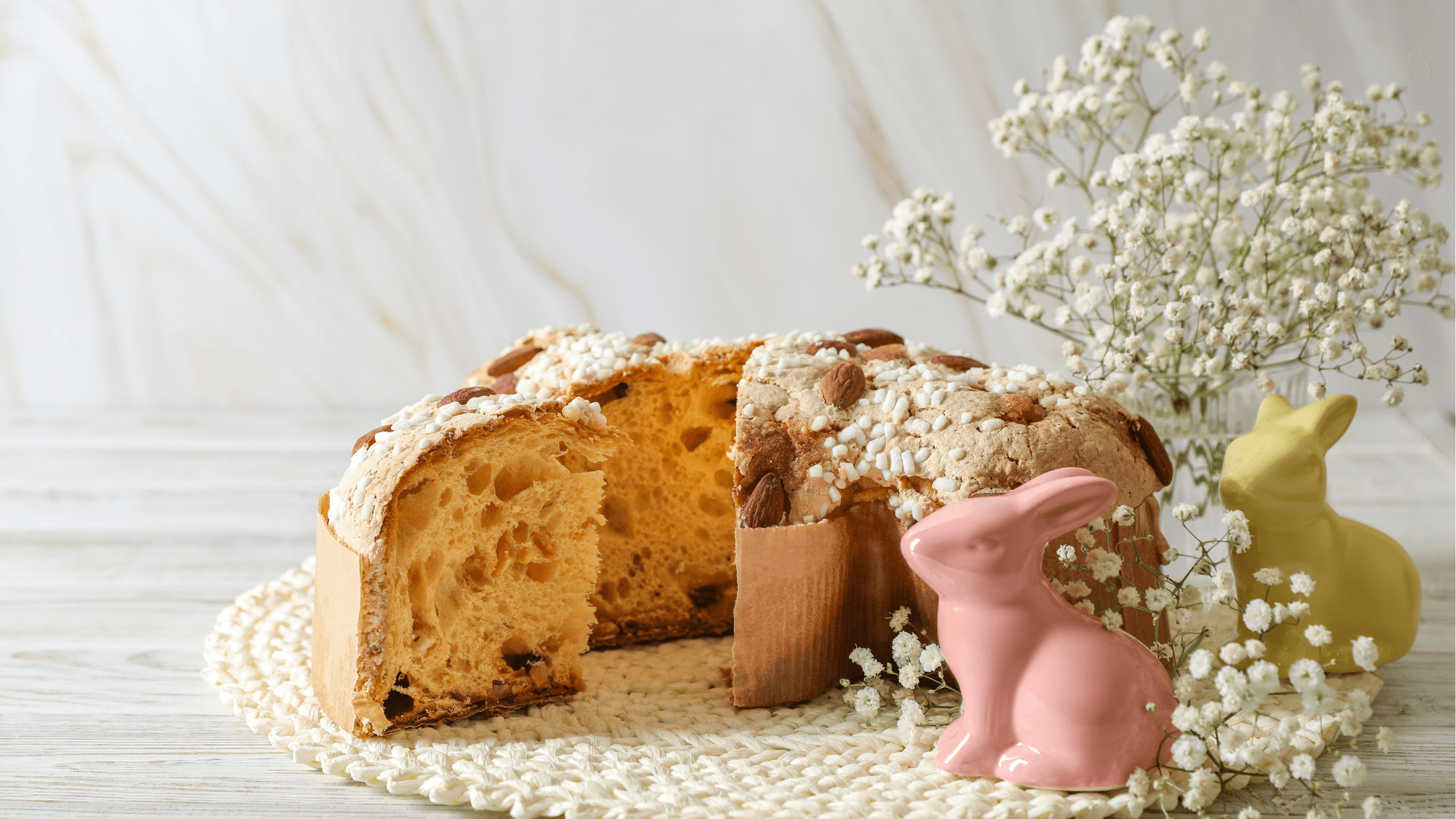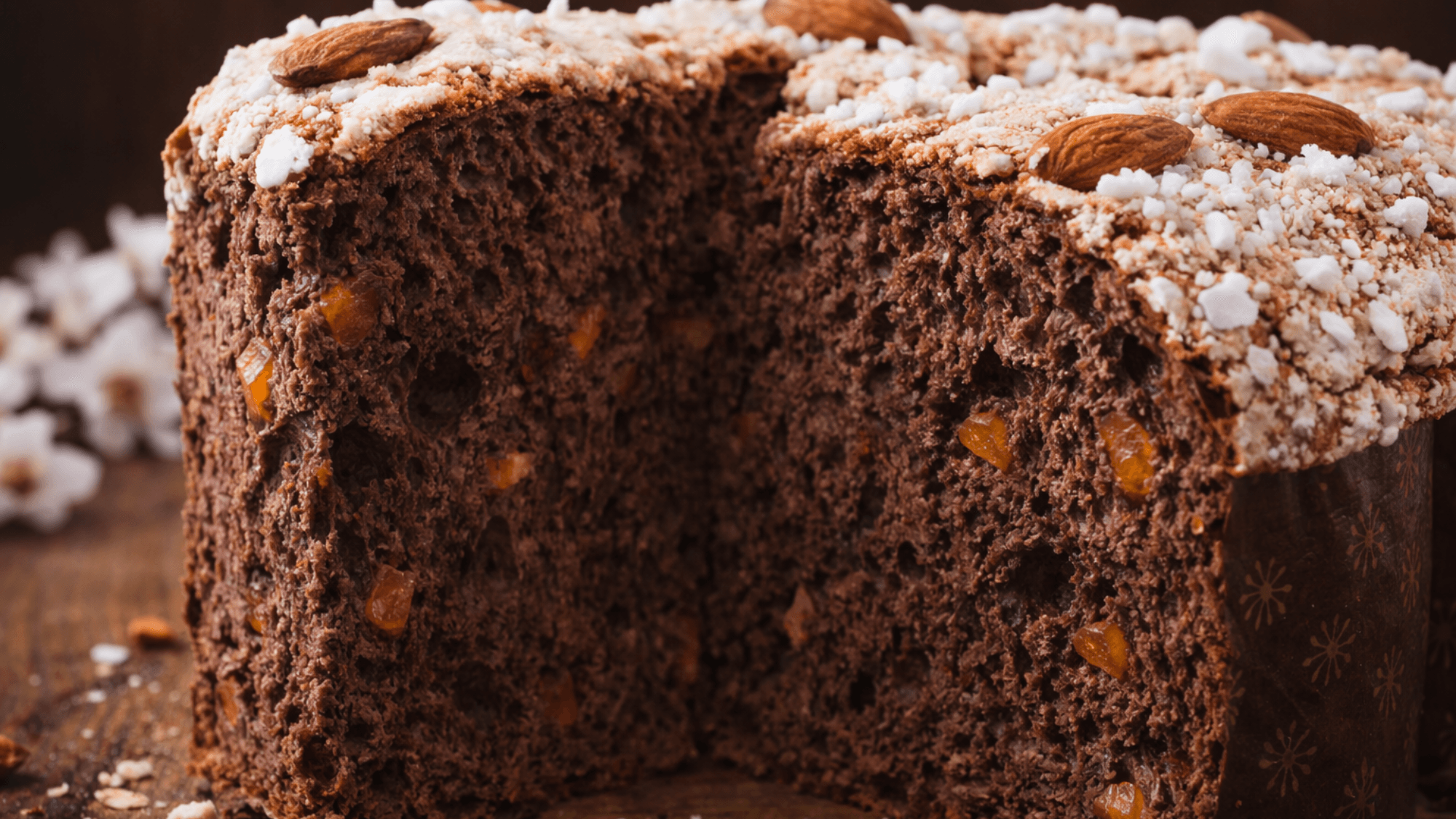
Chocolate colomba made with sourdough starter is a rich and irresistible variation of the classic Italian Easter bread, designed to deliver a soft, shreddable, and well-balanced crumb even with cocoa and chocolate in the dough.In this recipe, the dough structure is carefully calibrated to ensure extra softness and counter chocolate’s natural tendency to make enriched doughs drier. The use of a chocolate ganache helps hydrate the cocoa solids, keeping the colomba tender and enjoyable even after baking. The filling still includes traditional candied orange peel, paired with chocolate chips for a richer, more indulgent flavor that stays perfectly balanced.Make sure to use a sourdough starter that is well balanced and not overly acidic. For best results, I recommend refreshing it daily for at least 5–7 days before mixing the dough, so you can rebalance your starter properly.If you do not feel fully confident using sourdough yet, here is the recipe for Classic Colomba made with baker’s yeast.
1 kg colombe
Equipment
- Stand Mixer
- Immersion Blender
- Food-Safe Bags
- Panettone Skewers
Ingredients
FOR THE CHOCOLATE GANACHE
- 240 gr Cocoa Mass (or 99% chocolate)
- 450 gr Water
FOR THE FIRST DOUGH
- 755 gr Strong 00 Flour for Panettone (W360, 14%–15% protein)
- 270 gr Sourdough Starter (at the second or third refreshment)
- 245 gr Soft Butter
- 250 gr Water (at 30°C (86°F))
- 250 gr Granulated Sugar
- 210 gr Egg Yolks
- 15 gr Malt
FOR THE SECOND DOUGH
- 145 gr Strong 00 Flour for Panettone (W360, 14%–15% protein)
- 120 gr Egg Yolks (cold)
- 110 gr Granulated Sugar
- 120 gr Orange Blossom Honey
- 145 gr Heavy Cream
FOR THE FLAVOR EMULSION
- 85 gr Clarified Butter (or add an extra 75 g of soft butter)
- 60 gr Aromatic mix for enriched doughs (here is the recipe)
- 10 gr Salt
- 10 gr Bourbon Vanilla
FOR THE FILLING
- 500 gr Candied Orange Peel (well drained from the syrup)
- 300 gr Chocolate Chips
FOR THE GLAZE
- 440 gr Granulated Sugar
- 200 gr Egg Whites
- 170 gr Toasted Almonds (unblanched)
- 50 gr Bitter Almonds
- 70 gr Toasted Hazelnuts
- 35 gr Corn Flour
- 35 gr Remilled Durum Wheat Semolina
FOR FINISHING
- Pearl Sugar
- Whole Unblanched Almonds
- Powdered Sugar
Instructions
The Day Before: Chocolate Ganache, Flavor Emulsion, and Glaze
FOR THE CHOCOLATE GANACHE
- Finely chop the cocoa mass or 99% chocolate. In the meantime, bring the water to a boil.
- Pour the boiling water over the chopped cocoa mass and stir well until the chocolate is completely melted and the ganache is smooth.
- Cover with plastic wrap touching the surface and let the ganache crystallize at room temperature for at least 16 hours.
For the Flavor Emulsion
- Mix together, without whipping, the clarified butter, salt, vanilla, and the aromatic mix you prepared. Cover with plastic wrap and refrigerate for at least 12 hours. Remember to take the emulsion out at least 2 hours before using it in the second dough.
For the Glaze
- Finely blend the almonds, hazelnuts, bitter almonds, and sugar until you get a very fine powder.
- Then mix this powder with the corn flour and the durum wheat semolina.
- Add the egg whites, lightly beaten but not whipped, and mix until you get a creamy, fairly fluid mixture.
- Cover with plastic wrap and store the glaze in the refrigerator until ready to use.
For the First Dough
- First, prepare a syrup by dissolving the sugar and egg yolks in the water at 30°C (86°F), using an immersion blender.
- Pour the syrup into the mixer bowl and add the sourdough starter at its second or third refreshment.
- Start mixing for a few minutes so the starter dissolves before adding the flour.
- Once you have added the flour and the malt, let the dough come together, stop the mixer, and let it autolyse for about 45 minutes. This process will help you develop a more elastic dough that is easier to handle in the next steps.
- After the autolyse, resume mixing until the dough develops a strong and elastic gluten network.Check the gluten development by taking a small piece of dough and stretching it gently with your hands until it forms a very thin membrane. If it does not tear easily, the gluten is properly developed.
- Once the dough is well developed, add the room-temperature soft butter in several additions, letting it fully absorb each time.
- The first dough is ready. Transfer it to a large container, dot the surface with a few small pieces of soft butter, and let it rest at 22–24°C (72–75°F) for 15 hours, until it has tripled in volume. Rising time depends on room temperature, so before moving on to the next dough, make sure it has tripled from its original volume. To monitor the rise more easily, I recommend marking the starting level and the target level on the container (original volume + 2 times the original volume).
For the Second Dough
- Put the first dough and the flour into the mixer. Start the machine and mix until the dough comes together very well and forms a strong, elastic gluten network.
- Add the cold egg yolks and mix until they are completely absorbed.
- Then add the sugar and the honey. Keep mixing until the dough becomes smooth again and pulls away from the sides of the bowl.
- Once the dough tightens again, add the cream in several additions, letting it absorb fully after each addition.
- When the dough is smooth and no longer sticky, check the temperature with a thermometer and make sure it is below 26°C–28°C (79°F–82°F). If it is warmer, cover the dough with plastic wrap and chill it in the refrigerator until it cools back down to around 20°C (68°F).
- Now add the fats, alternating ⅓ of the chocolate ganache and ⅓ of the flavor emulsion prepared the day before, adding them in several additions and letting each one absorb fully before the next addition.Continue until all of the ingredients have been incorporated.
- Once the dough is fully developed, add the candied orange peel and the chocolate chips, and mix very gently for a few minutes.
- Let the dough rest for about 1 hour so the gluten can relax and the proteins can finish hydrating.
- Turn the dough out onto a work surface lightly greased with butter and divide it into the desired sizes. For 1 kg colombe, divide into 900 g portions of dough and let them rest on the bench for 5 minutes.
- After 5 minutes, shape each portion into a loose round by folding the dough over itself and tightening the base to build tension. Let the rounds rest for another 15 minutes.
- Once ready, divide each round into 2 portions: one larger piece (about 2/3 of the dough) and one smaller piece (about 1/3 of the dough).
- Use the larger piece to form the “body” of the colomba. Gently stretch the dough with your hands and fold it over itself as if making folds. Then roll it lightly on the work surface to shape a log and place it lengthwise in the mold (from head to tail).
- Shape the “wings” using the remaining piece of dough. Form another log as above and place it crosswise over the central body to create a cross.
- Proof the colombe at 26–28°C (79–82°F) for 5–6 hours, until the dough rises to about one finger’s width below the rim of the paper mold.
GLAZING & BAKING
- Glaze the surface of each colomba with about 100 g of the almond glaze prepared the day before.
- Sprinkle the surface generously with pearl sugar and a few whole unblanched almonds. Finish with a light dusting of powdered sugar.
- Bake the colombe in a conventional oven at 150°C (302°F) for about 50–55 minutes. During the last 5 minutes of baking, crack the oven door slightly open using a small ball of aluminum foil, so excess steam can escape.
- To check doneness, make sure the center of the colomba reaches about 92°C (198°F).
- Once baked, skewer the colombe with the appropriate panettone skewers and invert them for at least 2 hours.
- After that, turn the colombe right side up, remove the skewers, and let them cool completely for 6–8 hours before sealing them in food-safe bags.
Nutrition
Serving: 1COLOMBA | Calories: 4663kcal | Carbohydrates: 672g | Protein: 77g | Fat: 197g | Fiber: 28g | Sugar: 394g | Net Carbohydrates: 644g